ACE for Wildlife Network Social Network Analysis
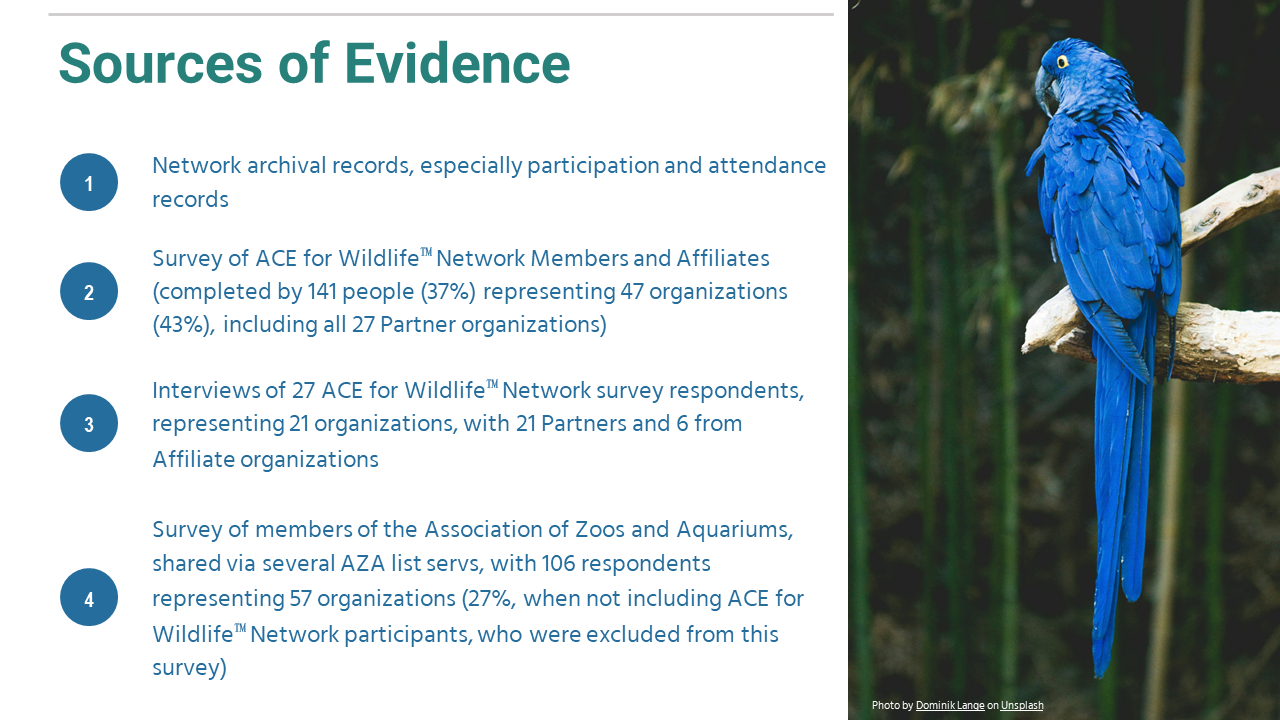
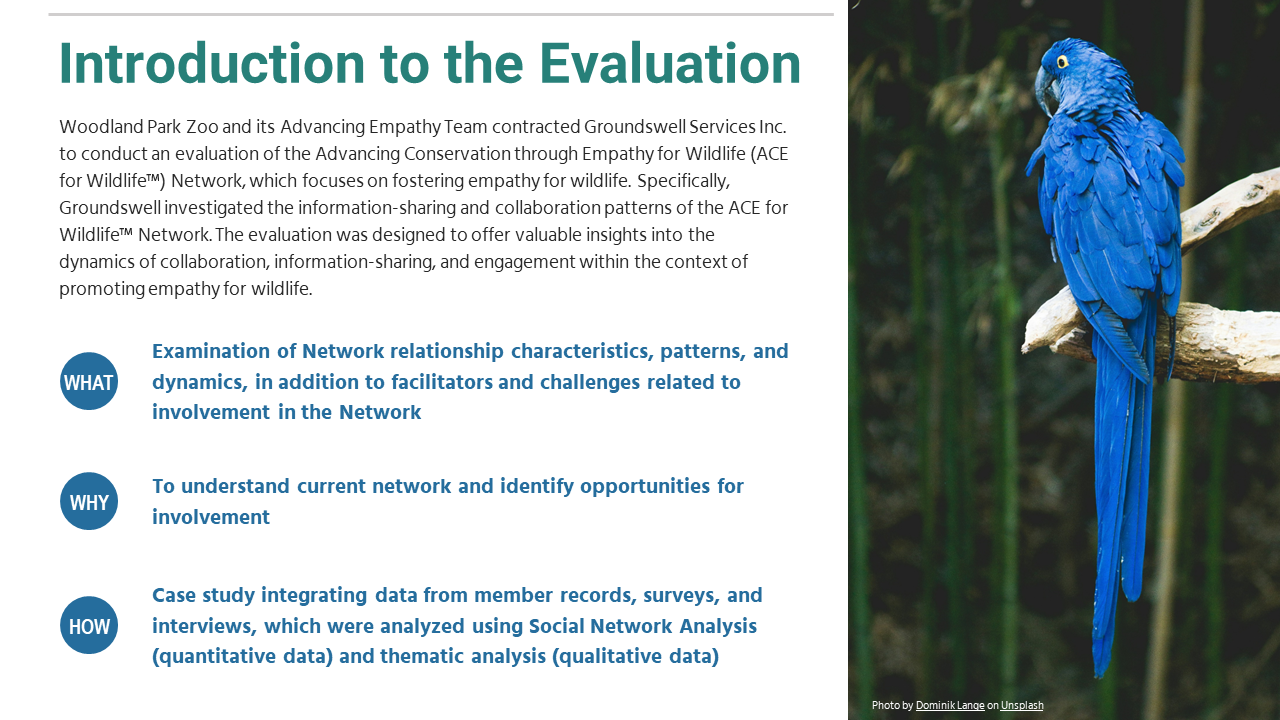
Woodland Park Zoo and its Advancing Empathy Team contracted Groundswell Services Inc. to conduct an evaluation of the Advancing Conservation through Empathy for Wildlife (ACE for Wildlife™) Network, which focuses on fostering empathy for wildlife. Specifically, Groundswell investigated the information-sharing and collaboration patterns of the ACE for Wildlife™ Network. The evaluation was designed to offer valuable insights into the dynamics of collaboration, information-sharing, and engagement within the context of promoting empathy for wildlife.
Meet the Groundswell Services Team
Table of Contents
Introduction to the Evaluation
Key Findings
Introduction to Social Network Analysis
Glossary
Q1: What does the data tell us about collaboration?
Q2: What does the data tell us about information sharing?
Q3: What are the opportunities for and challenges to greater participation, collaboration, and cohesion among the Network?
Q4: How does empathy-related information spread beyond the Network to AZA accredited organizations?
Suggestions
Introduction to the Evaluation
Woodland Park Zoo and its Advancing Empathy Team contracted Groundswell Services Inc. to conduct an evaluation of the Advancing Conservation through Empathy for Wildlife (ACE for Wildlife™) Network, which focuses on fostering empathy for wildlife. Specifically, Groundswell investigated the information-sharing and collaboration patterns of the ACE for Wildlife™ Network. The evaluation was designed to offer valuable insights into the dynamics of collaboration, information-sharing, and engagement within the context of promoting empathy for wildlife.
Click on each image below to make it larger.
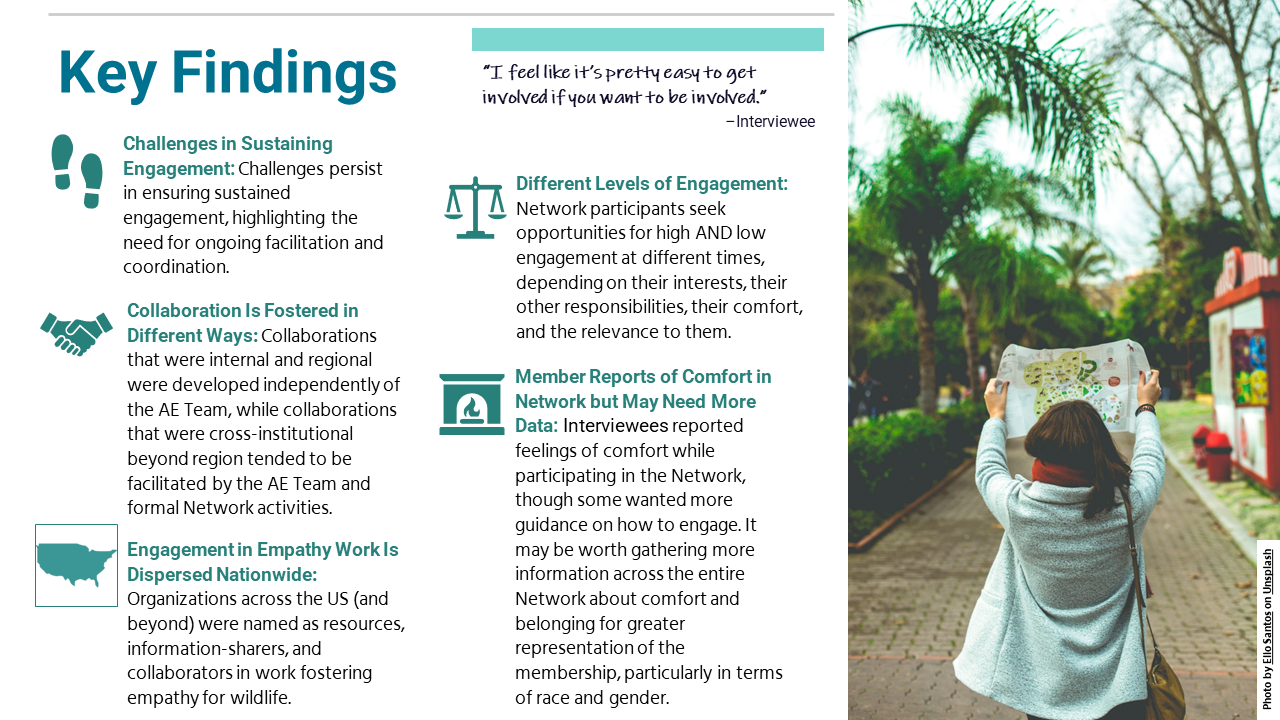
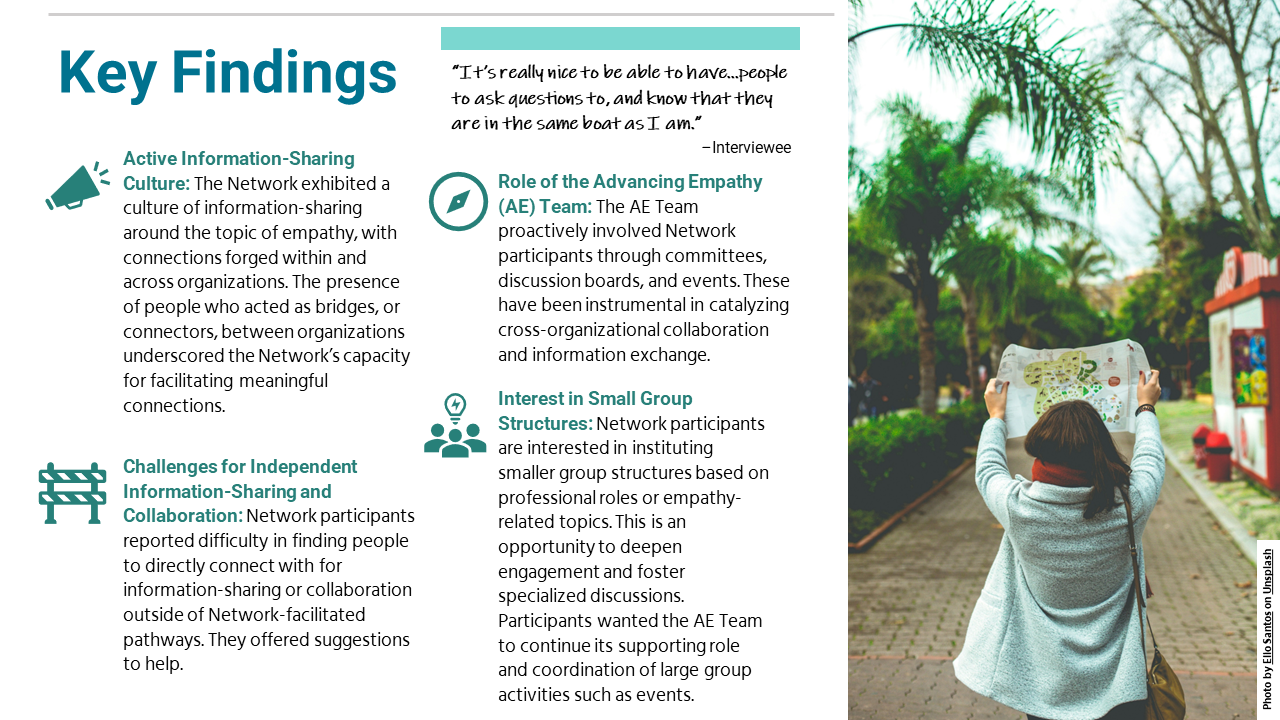
Key Findings
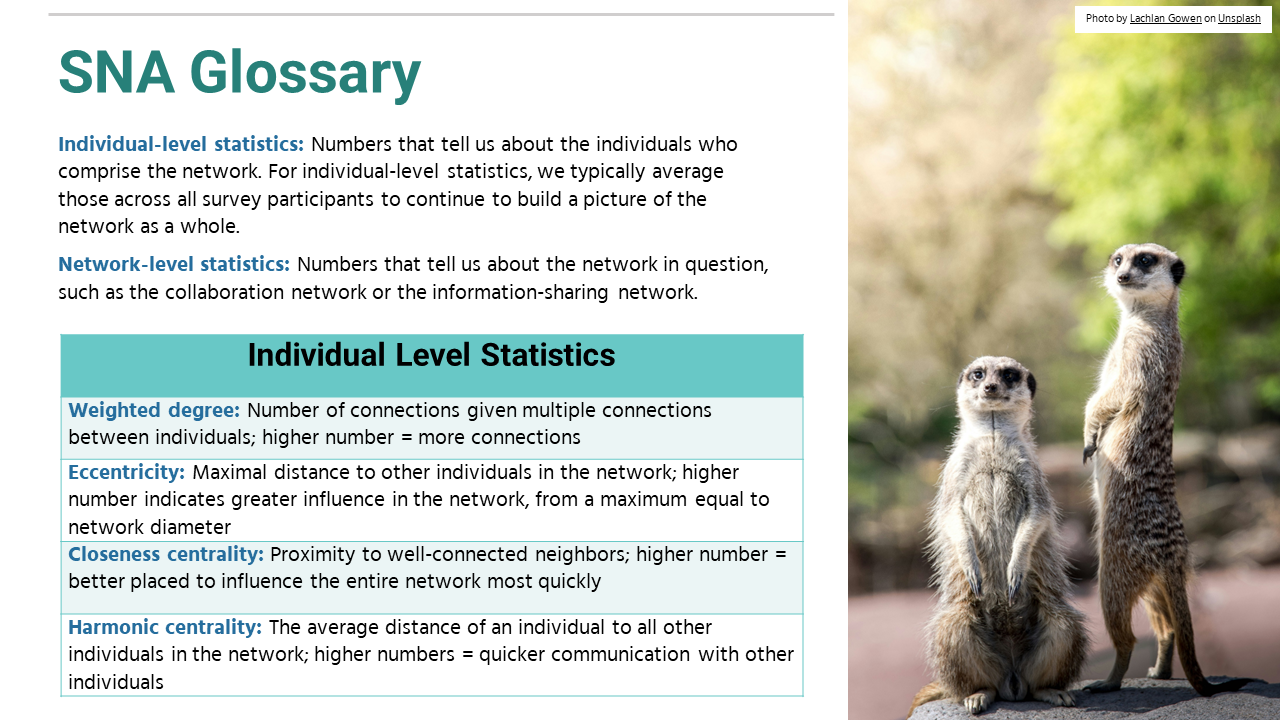
Introduction to Social Network Analysis
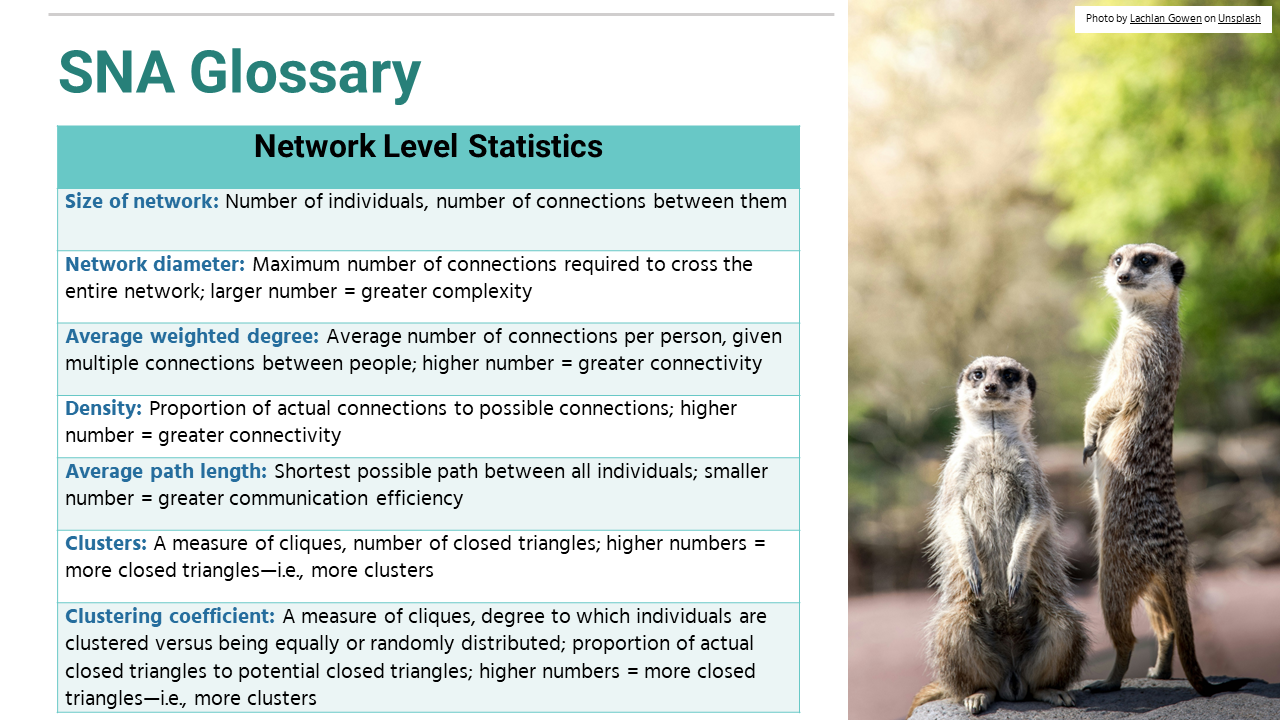
Glossary
Evaluation Question 1: What does the data tell us about collaboration?
We analyzed the self-generated collaboration reported by Network participants in the survey as well as the collaboration facilitated by the Advancing Empathy Team through Network Committees.
What does the data tell us?
Collaboration is happening mostly within organizations.
To a lesser extent, collaboration is occurring between organizations, especially at a regional level.
Interviewees said collaboration was facilitated by the Advancing Empathy Team and by Network participants connecting with each other outside of formal Network activities.
Specific people play an important role as bridges between organizations.
Both committees and bridges help to foster collaboration between people from different organizations.
Committees provide a positive model of small group connection-building that could inform development of a multi-hub structure or other small group approach.
Committee Collaboration
Evaluation Question 2: What does the data tell us about information sharing?
We analyzed the self-generated information-sharing reported by Network participants in the survey and the information-sharing facilitated by the Advancing Empathy Team through the Network discussion board and events.
What does the data tell us?
More information-sharing than collaboration is occurring across organizations in the Network.
More information-sharing bridges are active when compared to the number of collaboration bridges.
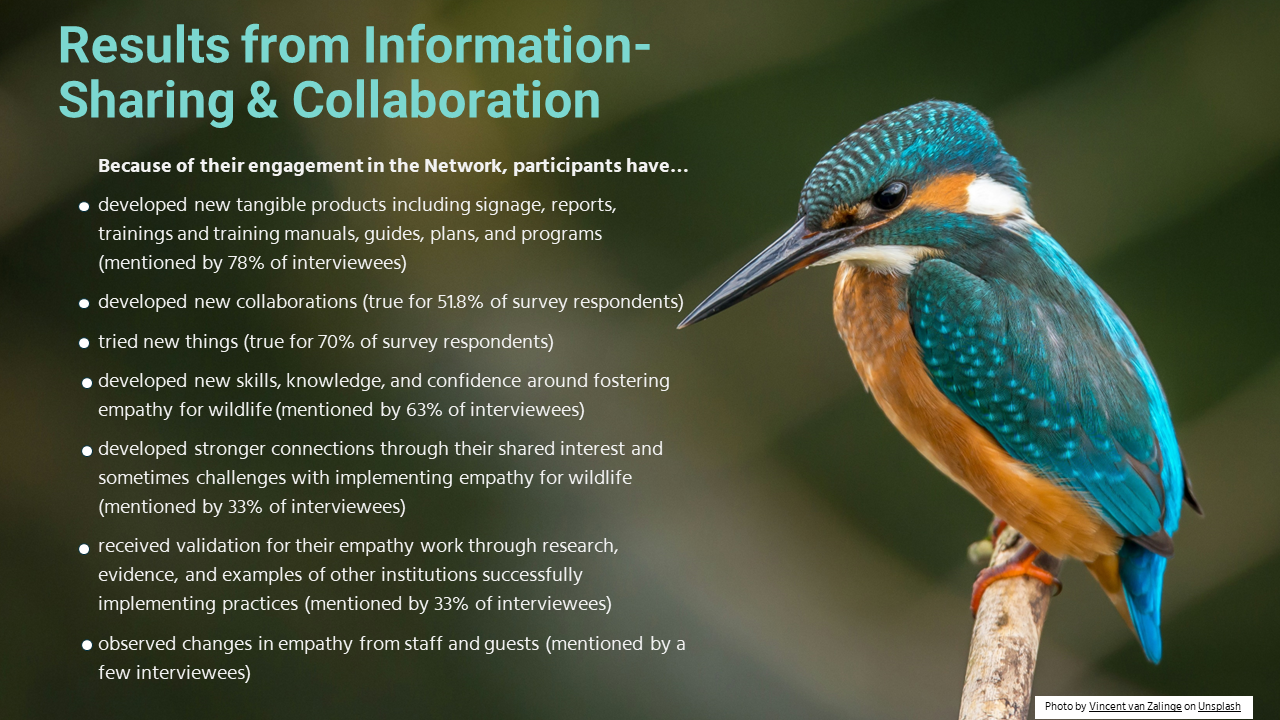
Survey respondents reported that they are trying new things because of what they have learned from others in the Network.
People are exposed to information, learning, and possible collaborative and information-sharing with others through events, and this is an important way that information is shared.
Discussion board participation is relatively low, though people report valuing it for different reasons. Interviewees encouraged the Advancing Empathy Team to continue playing a catalyzing role with the discussion board.
Interviews with low-connectivity participants revealed that people may be satisfied with simply accessing resources through the Network without the need for connection with individual people.
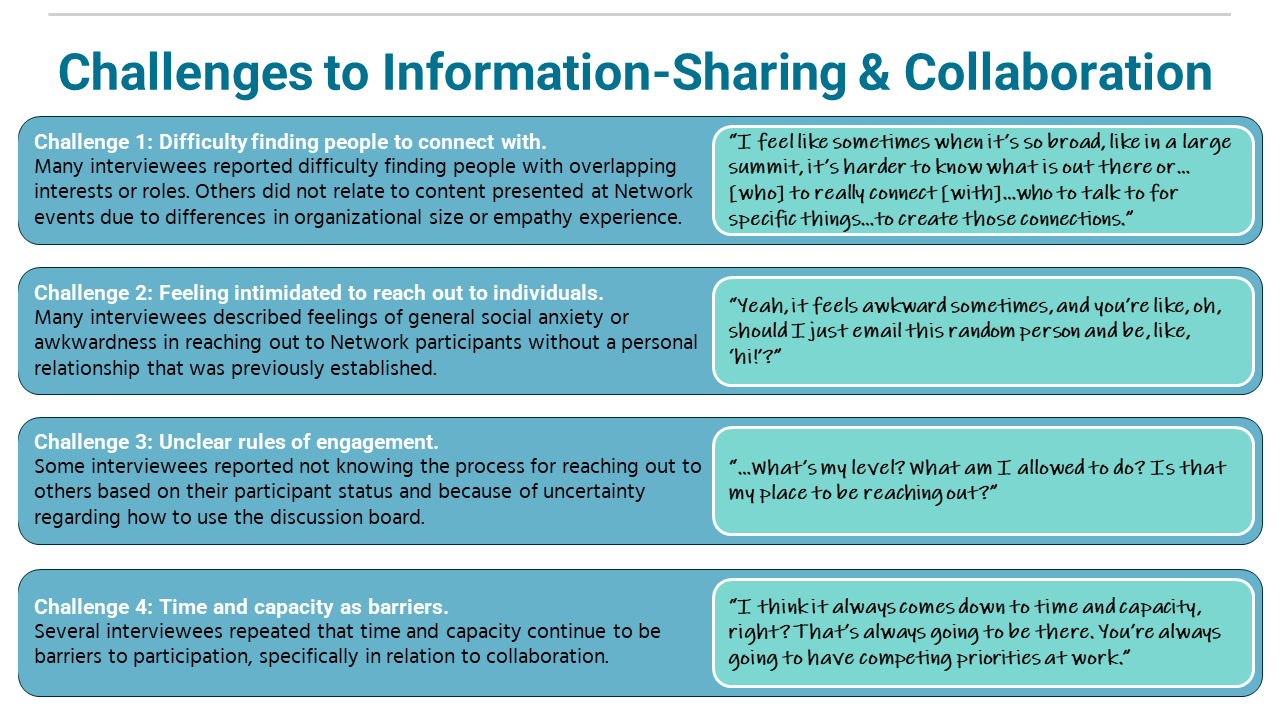
Evaluation Question 3: What are the opportunities for and challenges to greater participation, collaboration, and cohesion among the Network?
We analyzed information from open-ended survey questions and interviews with 27 Network participants.
Click on each image below to make it larger.
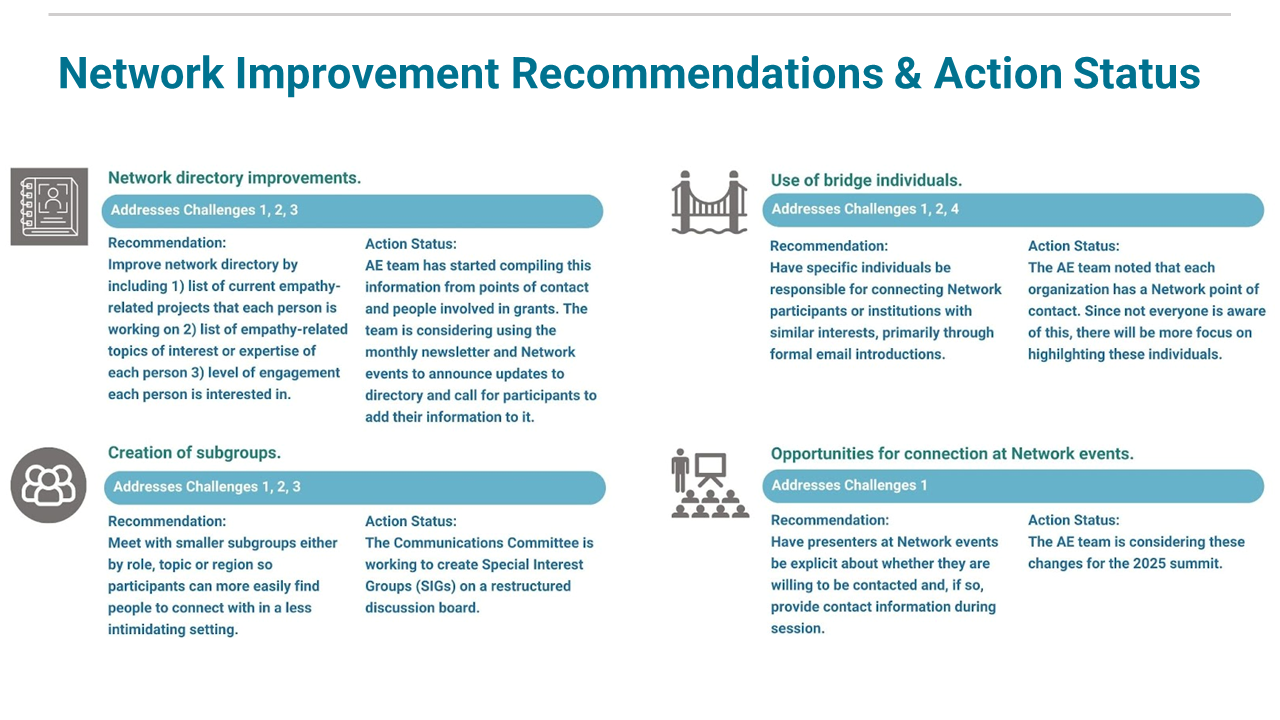
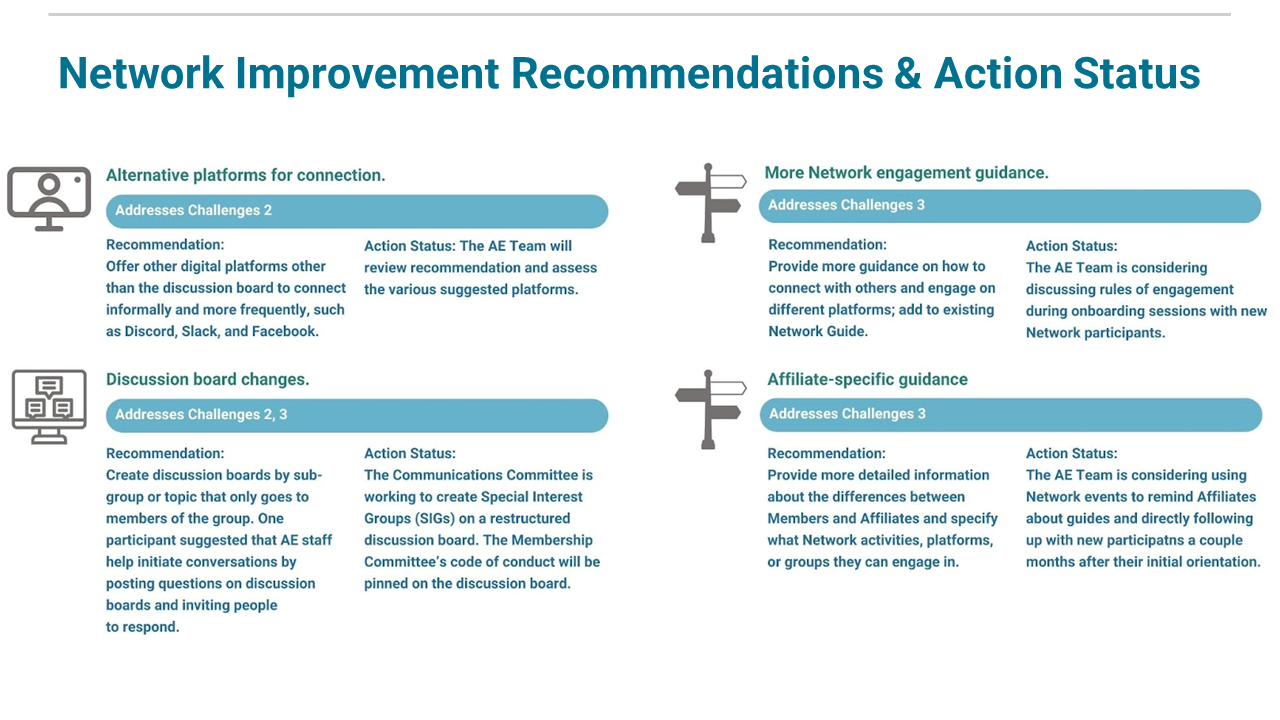
Recommended actions
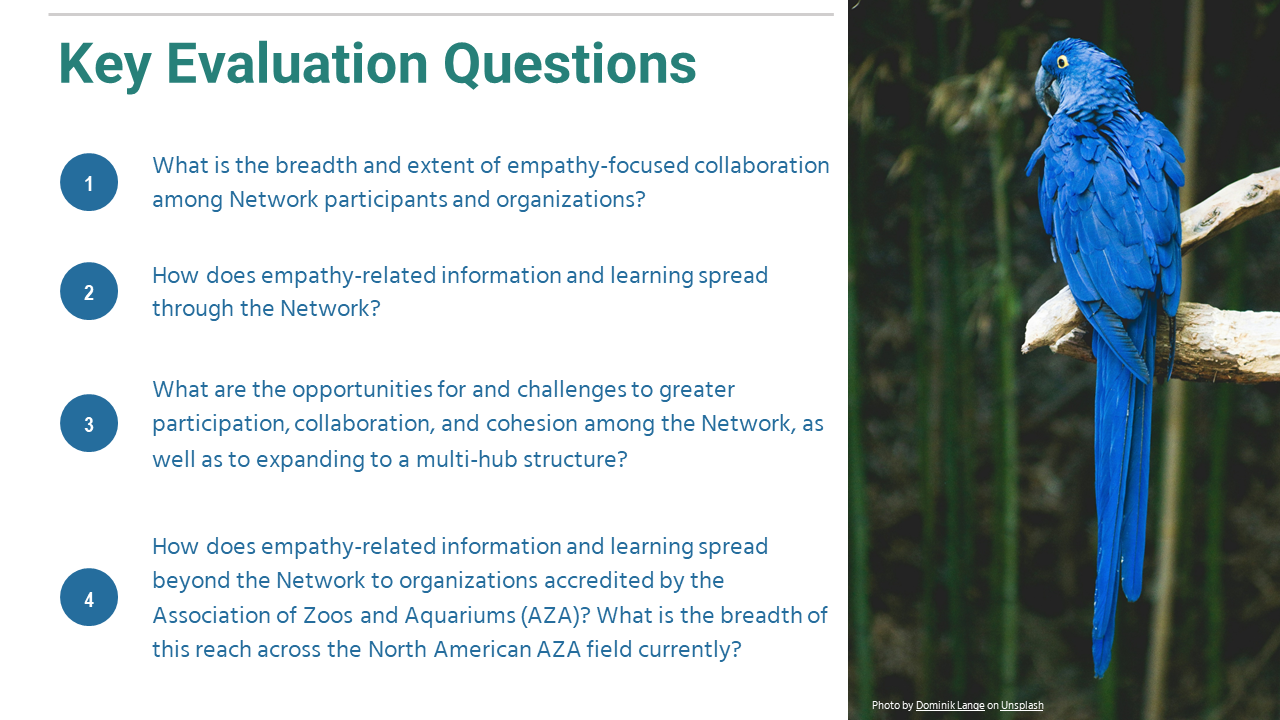
Click on each image below to make it larger.
Evaluation Question 4: How does empathy-related information spread beyond the Network to AZA accredited organizations?
We analyzed information from a survey to AZA members.
Suggestions
Set intentions for the Network
Use baseline results to establish clear intentions for collaboration, information-sharing and learning goals within the Network and track progress over time. This will also provide a roadmap for future growth and evaluation.
Support small group structures
Facilitate the establishment of smaller group structures aligned with roles or empathy-related topics to enhance collaboration and information-sharing across organizations.
Scaffold engagement opportunities
Continue to create varied spaces within the Network, each tailored to achieve different outcomes. For example, open engagements can attract temporary participation for fresh ideas and inspiration while other spaces can focus on fostering deeper, collaborative relationships. These multiple avenues for engagement can accommodate varying preferences among participants.
Sustain bridges and those exhibiting "betweenness"
Recognize and support individuals who act as bridges within the Network to connect organizations. Additionally, engage individuals adjacent to highly connected participants (also known as “betweenness” to integrate them into collaborative efforts and strengthen network connectivity.
Enhance engagement opportunities in the Network
Develop tailored strategies to promote participation and engagement in small group activities, leveraging successful approaches from committees as a model and provide the necessary resources for these initiatives.
Engage organizations not in the Network named by others
Strategically reach out to organizations not part of the Network but involved in fostering empathy for wildlife and explore opportunities to involve them to expand the Network’s reach.